Europe
Asia
Oceania
Americas
Africa
You don’t always need optical aid to see beautiful things in
It’s the start of another great day on your holiday. After enjoying breakfast under your awning, basking in the early morning sunshine, you head off sightseeing. Maybe you had a lovely day spent wande
From stargazing as a child to presenting the iconic The Sky At Night , Dame Maggie Aderin, 57, tells us how she beat the odds to become a space scientist, and why life beyond Earth matters to all of us
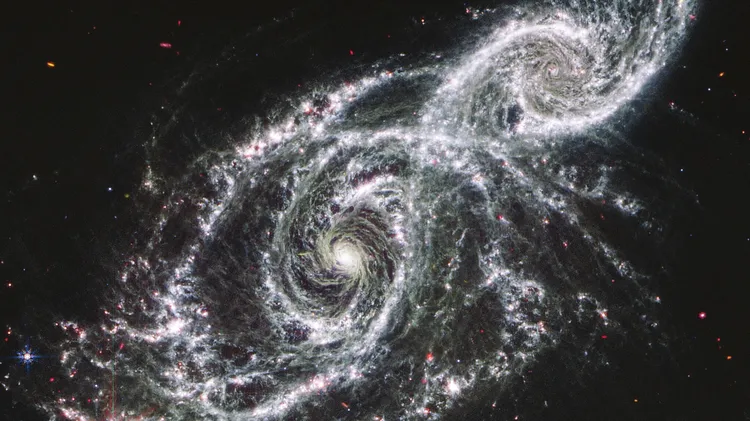
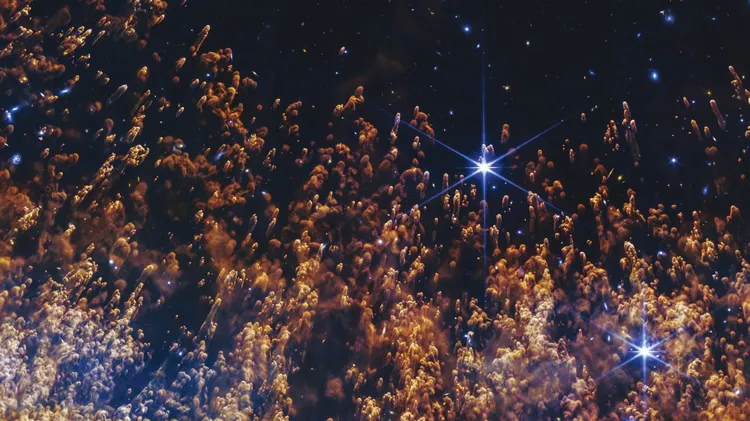
Since JWST’s launch four years ago, some mind-blowing observations have been made by this internationally operated, state-of-the-art, space-based super-telescope
DID YOU KNOW? JWST’s primary mirror weighs 705 kilograms ...
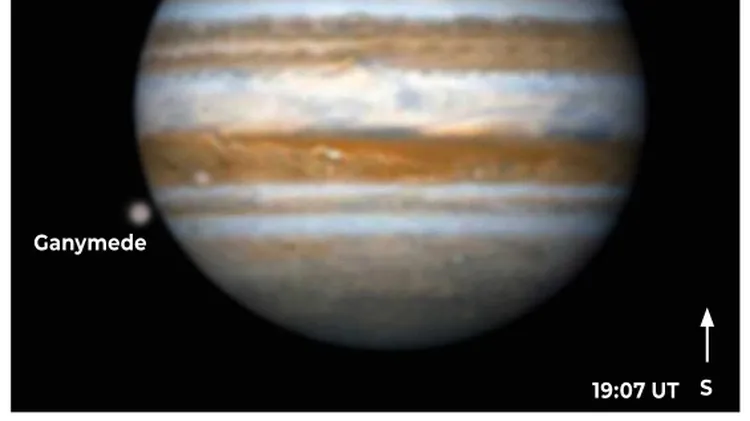
1 Sunday Ganymede disappears into Jupiter’s shadow at 19:48 UT, reappearing again at 23:11 UT. 5 ◀ Thursday From now until 26 March is the optimum time for this month’s Deep-Sky Tour (page 56) of obje
The meteor draws a luminous stroke across the darkness and vanishes, like a firework that forgot to boom. Thrusting my cold hand skywards as the bright light flares, I shout “Wow, there goes another o