Europe
Asia
Oceania
Americas
Africa
Some bright stars of winter still linger after sunset
he bright y
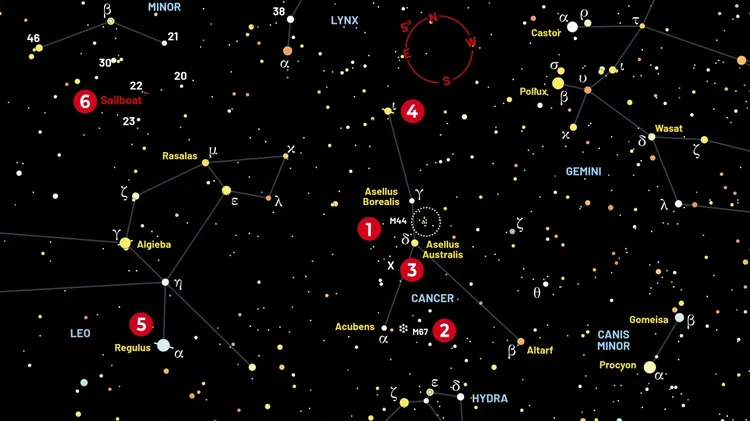
Just north of mag. +3.9 Asellus Australis (Delta (δ) Cancri), you’ll spot a ‘little cloud’, which is what ‘Nephelion’, M44’s ancient Greek name, means. At only 577 lightyears away, M44 (also known as
It’s the start of another great day on your holiday. After enjoying breakfast under your awning, basking in the early morning sunshine, you head off sightseeing. Maybe you had a lovely day spent wande
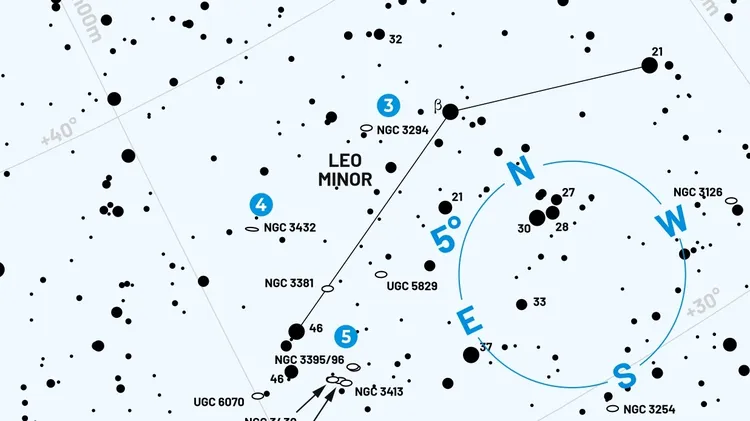
Our first target is the Little Pinwheel Galaxy, NGC 3184, positioned 48 arcminutes west of mag. +3.0 Tania Australis (Mu (μ) Ursae Majoris). This spiral galaxy has an apparent magnitude of +10.1 but i
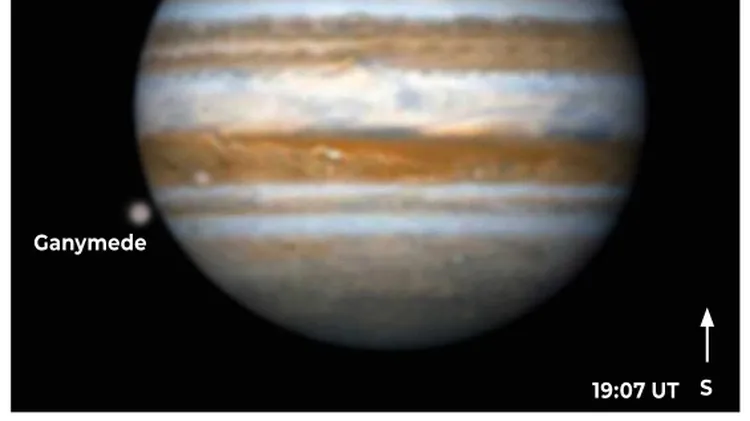
1 Sunday Ganymede disappears into Jupiter’s shadow at 19:48 UT, reappearing again at 23:11 UT. 5 ◀ Thursday From now until 26 March is the optimum time for this month’s Deep-Sky Tour (page 56) of obje
CLOSER’S WEEKLY HOROSCOPES
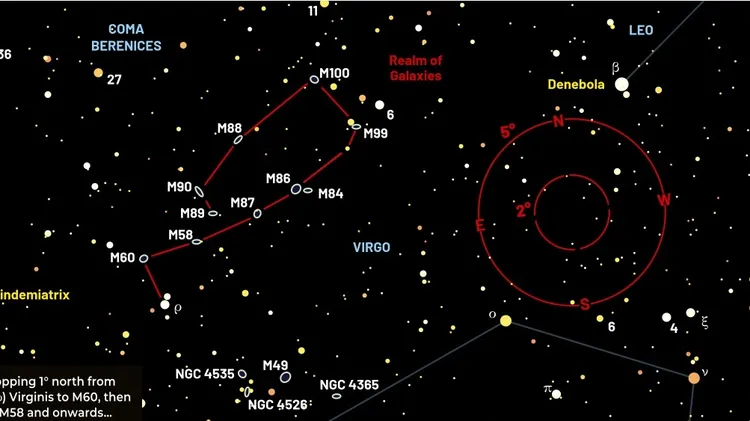
The spring sky is heavy with galaxies. As the stars of winter rotate westward, they drag the winter Milky Way with them, leaving us to gaze out into deep space at right angles to the plane of our home